

SOUND OF CARE/
TTA
SOUND PERFORMANCE.
Songs for Caretta Caretta or Low Tide & fFequencies Of Life
Songs for Caretta caretta is an experimental sound performance and sculptural research project that explores the possibility of composing for a non-human listener. The work asks a simple but profound question: What might music become if its intended audience were a loggerhead sea turtle?
Drawing on bioacoustics, marine ecology, and sound art, I will design and build resonant instruments and sculptural objects tuned toward the low-frequency vibrational world inhabited by Caretta caretta. Rather than representing turtles or imitating their sounds, the project creates sonic environments that invite attentive listening across species.The performances are conceived as offerings rather than demonstrations.
They acknowledge that we cannot know how a turtle experiences sound, while remaining informed by scientific research into turtle hearing and underwater acoustics. This uncertainty becomes a central artistic material, opening space for curiosity, humility, and ecological imagination.
Combining instrument making, field recording, performance, and research, Songs for Caretta caretta proposes music as an act of interspecies attention. It invites audiences to reconsider listening as a shared ecological practice and to imagine new relationships between art, vibration, and the more-than-human world.
(UA, 4.10.2026 Ionian Center for Arts and Culture, Metaxata, Kefalonia, Greece, as part of the "We Are Nature 2026"-Festival/Conference)
SOUND OF CARE/
TTA
SOUND PERFORMANCE.
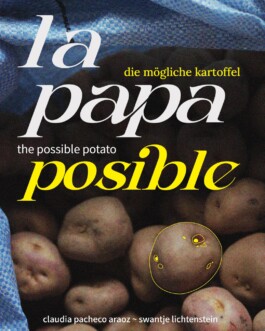
Künstlerische Forschung / Zwischenbericht, Publikation, 2025.
Claudia Pacheco Araoz & Swantje J.M. Lichtenstein
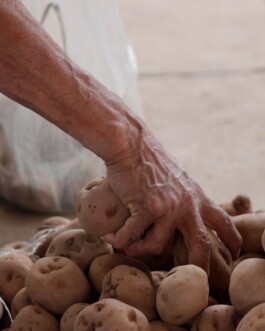
Die Kartoffel landete nicht von allein in Europa. Unser Projekt, betrifft die Kartoffel, die zum Sinnbild und Begriff deutscher Kultur wurde, indem sie die Geschichte von Kolonialisierung, Migration und Aneignung erzählt.
Im Dialog mit dem Gedanken der Mehrstaatlichkeit und der Praxis von crianza (s.u.) werden wir untersuchen, wie Europa seine eigenen Lebensformen immaterialisiert hat und sie in touristische Waren verwandelte, die ihren politischen, ökonomischen und affektiven Einfluss leugnen. Somit konnte die Fiktion aufrechterhalten werden, dass (kulturelle) Diversität nur von außen käme, dass „Sitten und Bräuche“ keinen Einfluss auf Europas Kultur und politische Gegenwart hätten.
This website uses cookies to improve your experience. We'll assume you're ok with this, but you can opt-out if you wish.